
Last updated November 22, 2026
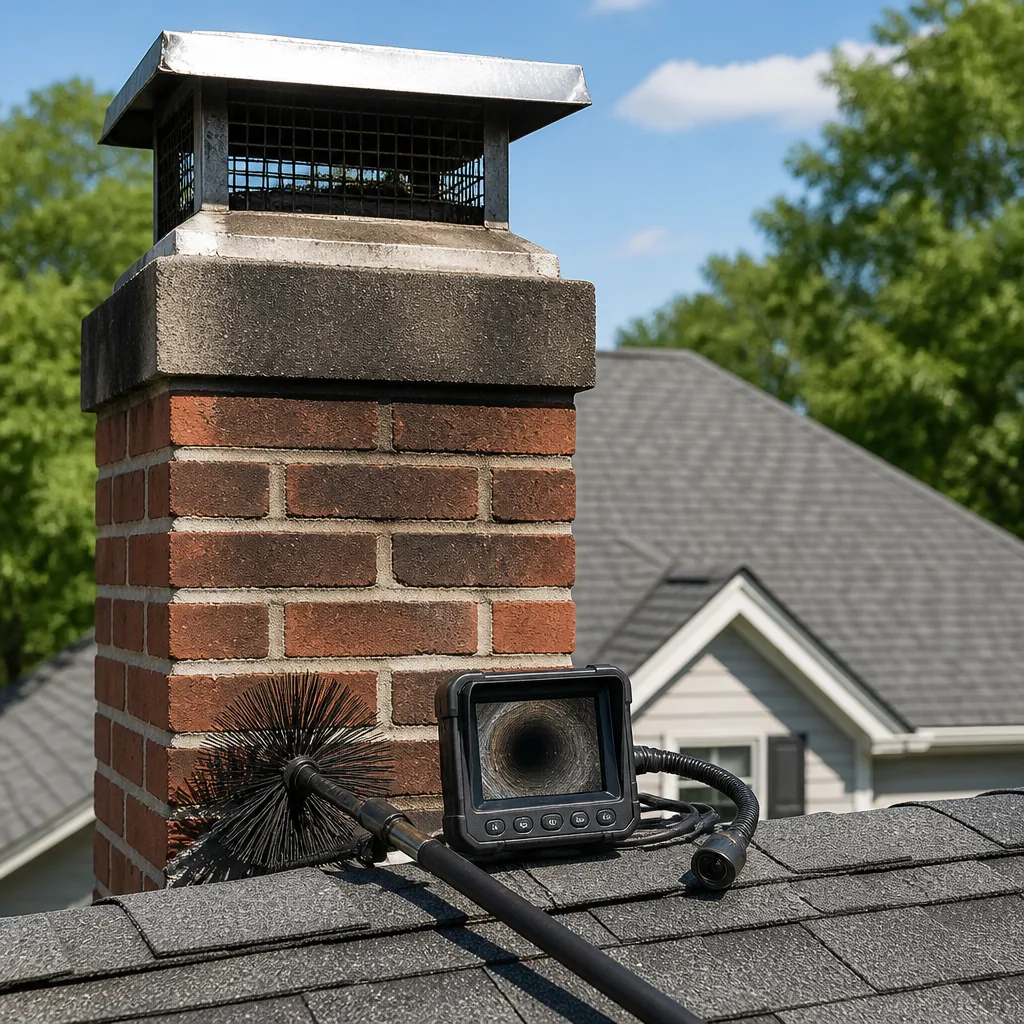 Sweep & inspection
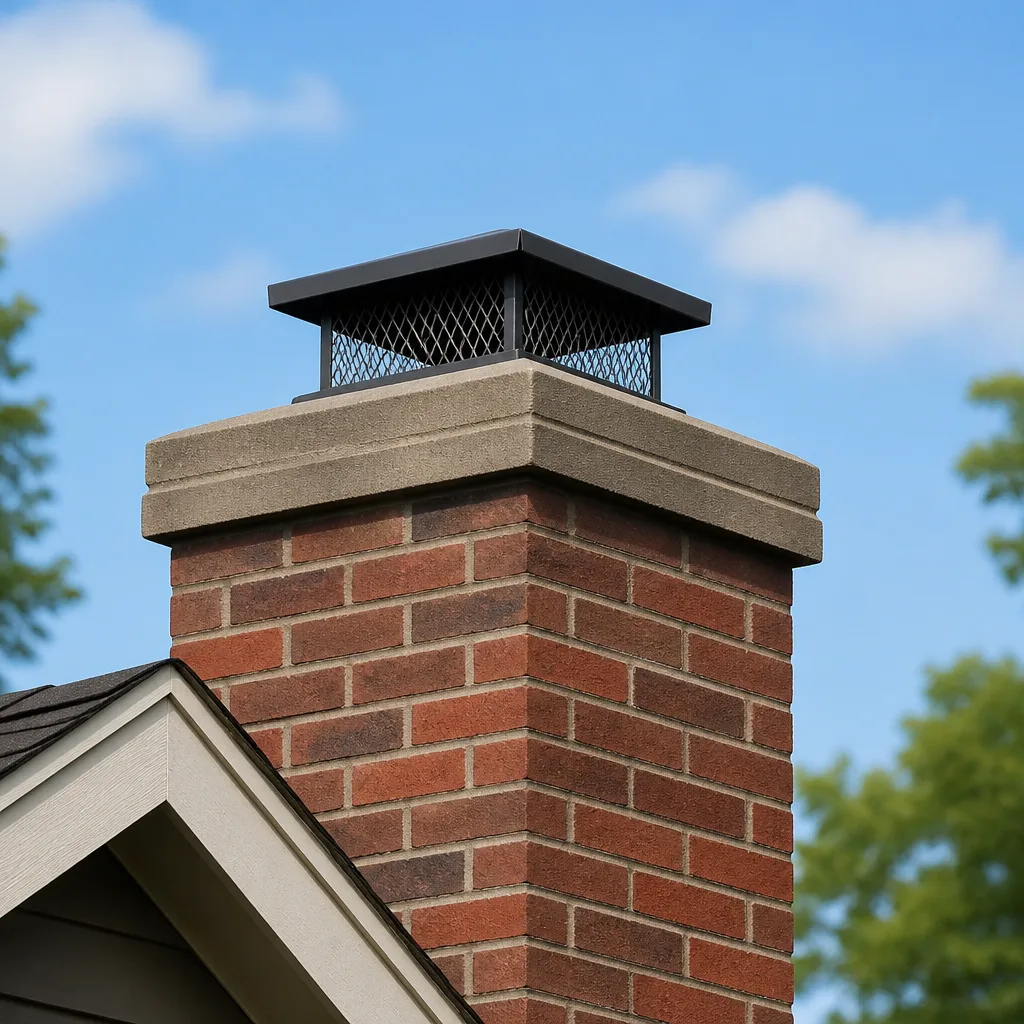 Caps & crowns
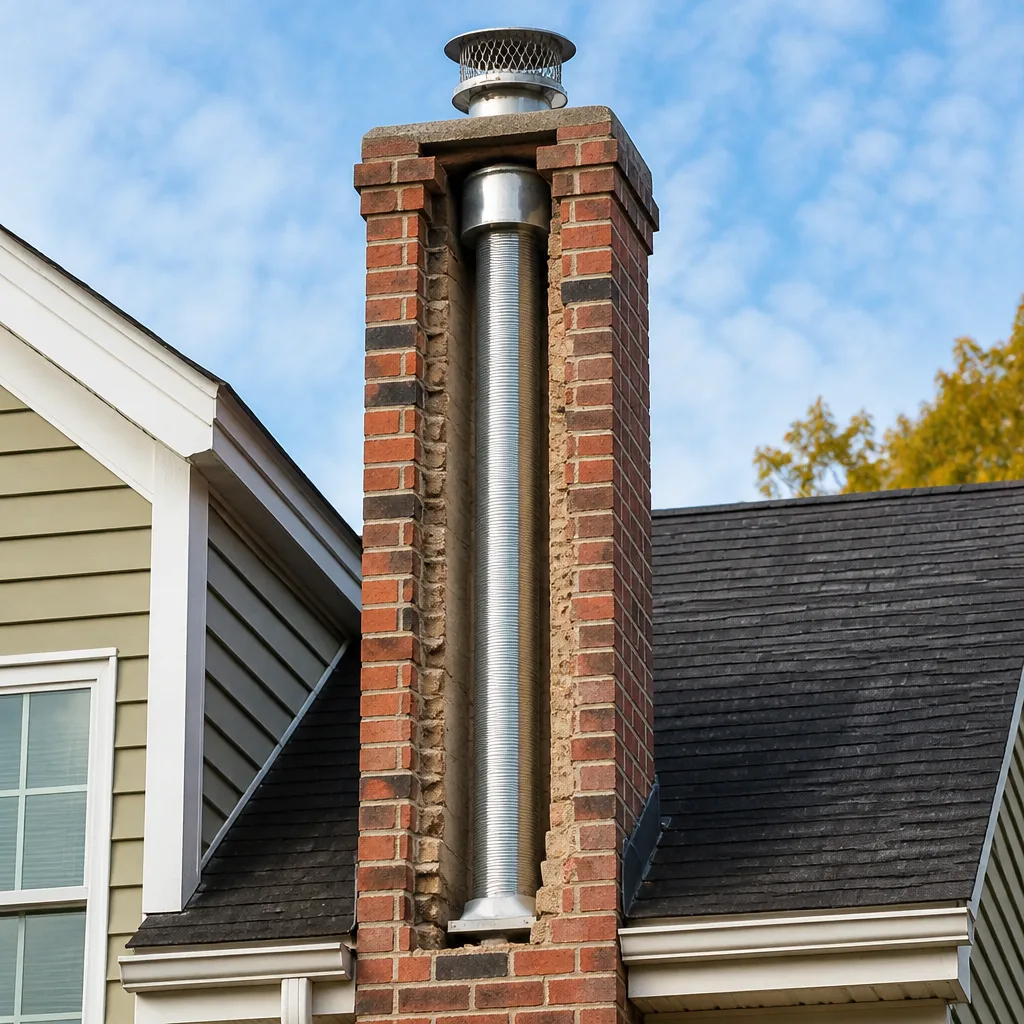 Flue relining
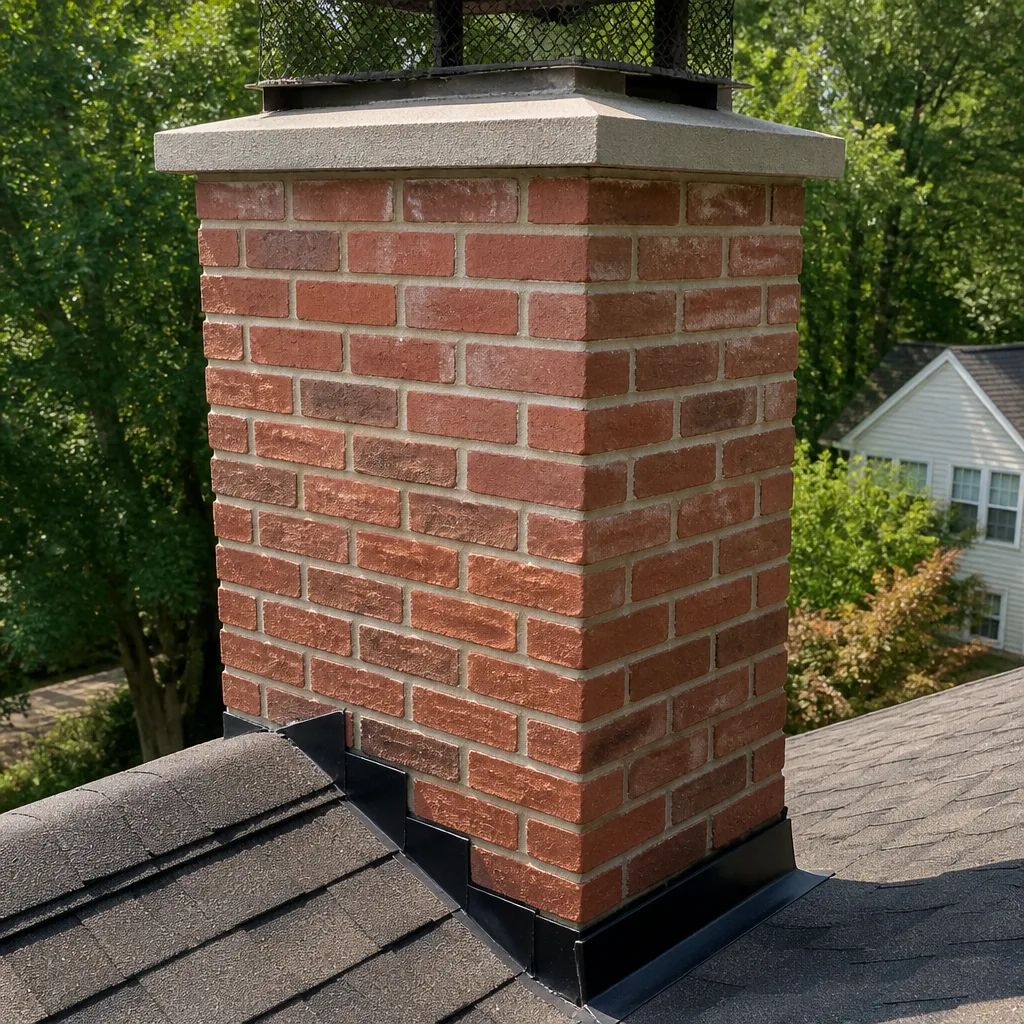 Masonry repair
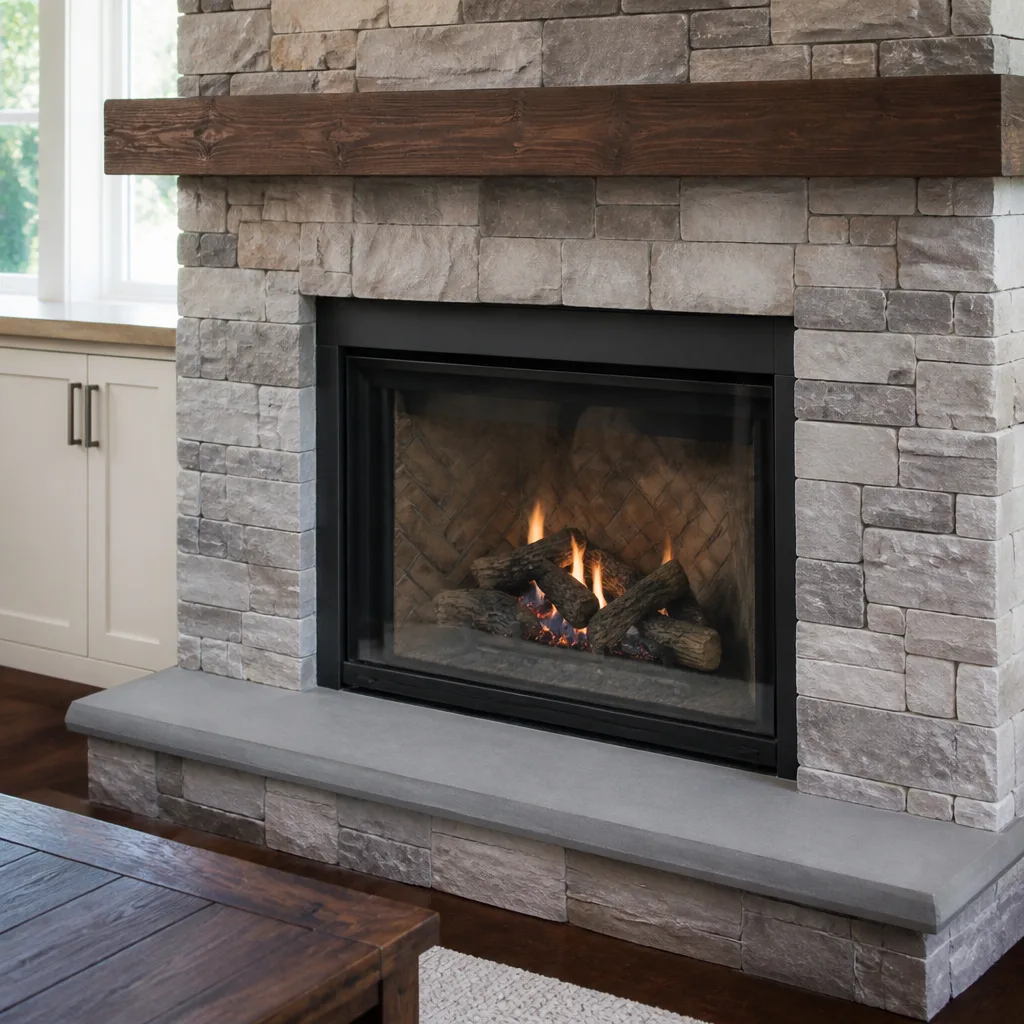 Gas fireplace service
Level 1 sweep and inspection to the NFPA 211 annual standard - flue, crown, cap, and flashing checked and photographed
Chimney sweep logs do not sweep chimneys. They loosen some creosote - which then falls where a brush and vacuum still have to collect it.
DIY vs Professional Chimney Cleaning: The Bedford-Stuyvesant Homeowner’s Decision Guide
A $60 brush kit will clean the first eight feet of a flue. The corbeled offset near the roofline, where the worst blockages tend to form, usually sits around 25 feet up and around a bend. That gap between what a homeowner can reach and what a chimney actually needs is the whole conversation. This guide isn’t about whether you’re capable of pushing a brush. It’s about what consumer equipment can’t see, can’t reach, and can’t document in a Bedford-Stuyvesant rowhouse flue system. We’ll map what each approach covers, where DIY is genuinely fine, where it isn’t, and how to decide for your own chimney.
Quick Answer
DIY chimney cleaning works for a lightly used gas-log insert with a factory-built liner, and it’s a reasonable choice there. For a wood-burning fireplace with an original clay tile liner in a pre-war Bedford-Stuyvesant rowhouse, DIY can’t reach the offset, can’t inspect the liner, and leaves you with no documentation. Professional cleaning reaches the full flue, includes a camera inspection, and produces a record you can hand to an insurer or a buyer.
Styles & brands we work with
- Sweep & inspection
- Caps & crowns
- Flue relining
- Masonry repair
- Gas fireplace service
Table of Contents
- What DIY Cleaning Actually Reaches
- What Professional Cleaning Covers That DIY Can’t
- When DIY Is Genuinely Reasonable
- When DIY Is Genuinely Dangerous
- Tools and Materials: Consumer Kits vs Professional Systems
- Insurance and Liability: The Documentation Question
- Four Questions Before You Choose
- What Each Path Costs in Bedford-Stuyvesant
What DIY Cleaning Actually Reaches
A consumer chimney brush on flexible rods handles the straight section of a flue. That’s the part above the firebox and below the first major transition. In a standard Bedford-Stuyvesant rowhouse, that straight run is often the shortest part of the whole system. The flue above it bends, steps, and narrows, and that’s where a brush on a rod stops being useful.
Here’s what typically lives above the reach of a homeowner’s kit:
- The corbeled offset. Many pre-war masonry chimneys step inward at a corbel to support the flue above. Soot and creosote collect on the shelf this creates. A brush pushed from below glides past it.
- Flue transitions. Where a clay tile liner changes size or where a newer liner was dropped inside an older flue, there’s a ledge. Debris piles up there.
- The smoke chamber. The sloped space directly above the damper. It’s shaped like an inverted funnel and consumer brushes can’t follow its angle.
- The crown and cap level. The top of the flue, where birds nest and where cracks in the crown begin. You can see it from the roof. Cleaning it from below is a different matter.
What a homeowner does accomplish from below is real, and we won’t pretend otherwise. Loose soot on the firebox walls and the lower flue comes off. The fireplace looks cleaner. The smell improves. But a clean-looking firebox and a clean flue are two different things, and the second one is what determines whether the chimney is safe to burn. The gap isn’t about effort. It’s about geometry.
What Professional Cleaning Covers That DIY Can’t
Professional chimney cleaning starts where the consumer kit ends. A rotary cleaning system uses a spinning head on a flexible shaft that follows the flue’s shape rather than skipping over its transitions. It contacts all four walls of a clay tile liner at once and works through offsets that stop a straight rod.
Just as important is what comes after the cleaning: chimney sweep work done properly ends with an inspection, not just a swept flue. A flue camera run down the liner shows cracks, gaps in the mortar joints between tiles, and areas where the liner has spalled. None of that is visible from the firebox.
Here’s what a professional visit covers that a DIY sweep cannot:
- Full-length rotary cleaning of the flue, including transitions and offsets.
- Smoke chamber and damper cleaning and assessment.
- Camera inspection of the liner interior, with photos the homeowner keeps.
- Creosote assessment by stage, because glazed third-degree creosote needs chemical treatment before it can be removed safely.
- Exterior check of the crown, cap, flashing, and masonry joints, which is where water intrusion almost always starts.
- A written report documenting condition and any recommended work.
That last item matters more than it sounds. A documented sweep is a record. It tells a future insurer, buyer, or chimney professional exactly what the flue looked like and when. We’ve seen plenty of Bedford-Stuyvesant homeowners discover the value of that record only when they needed it.
When DIY Is Genuinely Reasonable
There is a real category of chimney where DIY cleaning is fine. It’s narrower than most people assume, but it exists.
If you have a gas-log insert with a factory-built Class B liner, your flue produces very little of the creosote that wood-burning fireplaces generate. Gas burns clean. What accumulates is dust, a little soot, and occasionally insect debris. A consumer brush kit and a shop vacuum can handle that in a lightly used insert, and a homeowner who does it once a year is not creating a hazard.
DIY is also reasonable in these situations:
- The chimney was professionally inspected recently and the report found no liner defects, no gaps, and no heavy creosote.
- You burn only occasionally, a few fires a season, and the wood is well seasoned.
- You can safely access the roof to check the cap and crown, or you have someone who can.
- You understand that you’re cleaning, not inspecting, and you’ll book a professional inspection on a regular schedule regardless.
Notice what’s not on that list: a wood-burning fireplace in an older Bedford-Stuyvesant brownstone with an original clay tile liner. That combination is the most common one in the neighborhood and the least suited to DIY. If your flue has never been inspected since you bought the house, the first step isn’t a brush. It’s a look with a camera.
When DIY Is Genuinely Dangerous
Some flues should not be cleaned by a homeowner. The dividing line is the fuel type and the liner.
A wood-burning fireplace in a pre-war Bedford-Stuyvesant rowhouse most often has a clay tile liner, sometimes original to the building. Those liners crack. The mortar joints between tiles fail. When they do, creosote can seep behind the tiles and into the masonry itself, and a brush from below won’t touch it. More dangerous: a cracked tile lets heat reach the framing around the chimney. That’s a house fire waiting for the right burn.
DIY becomes genuinely dangerous in these cases:
- An uninspected clay tile liner in a building that predates modern flue standards.
- Heavy or glazed creosote, which a consumer brush can’t remove and which can ignite.
- A flue with known offsets or a smoke chamber that hasn’t been examined with a camera.
- Any chimney that has never been professionally inspected since you took ownership.
- A blocked flue, which can push carbon monoxide back into the living space instead of up and out.
We want to be direct about the risk without overstating it. Carbon monoxide is colorless and odorless, and a blocked or damaged flue is one of the ways it gets into a home. A chimney fire is louder and more visible, but by the time you hear it, the damage is already happening. Neither is a reason to panic. Both are a reason to know what your flue looks like inside before you burn. If there’s any question about the liner’s condition, stop and have it inspected. That’s not a sales line. It’s the whole point of the inspection.
Tools and Materials: Consumer Kits vs Professional Systems
The tool gap is where the DIY-versus-professional decision gets concrete. A consumer kit and a professional rotary system are not different grades of the same thing. They’re built for different jobs.
| Task | Consumer kit | Professional system |
|---|---|---|
| Straight flue section | Handles it | Handles it |
| Flue offsets and transitions | Skips or snags | Follows the flue’s shape |
| Smoke chamber | Not reachable | Cleaned and assessed |
| Glazed creosote | Not removable | Chemical treatment first, then rotary removal |
| Liner inspection | None | Camera with photo report |
| Cap and crown check | Homeowner’s judgment from the roof | Documented condition assessment |
| Written record | None | Report you keep |
Professional rotary heads come in different diameters and stiffnesses to match the flue size and the creosote stage. When a flue has glazed creosote, a chemical treatment softens it before the rotary head runs, because dragging a stiff brush through glazed creosote can harden it further or damage the tile. That sequence, chemical then mechanical, is not something a consumer kit accounts for.
The camera is the other half of the professional system, and it’s the part homeowners underestimate. It’s the difference between guessing and knowing. On the repair side, professional-grade components matter just as much. When a flue needs a liner, we supply and install components from brands like DuraFlex and Olympia Chimney. When a crown needs rebuilding, the materials come from suppliers like Copperfield rather than a hardware-store bag of mix. Those aren’t upgrade options. They’re the baseline for a repair that’s meant to last.
Insurance and Liability: The Documentation Question
Here’s the question almost nobody asks until it’s too late: if a chimney fire happens, what does your insurer want to see?
Most homeowner policies don’t require annual professional cleaning, but they do expect reasonable maintenance. After a chimney fire, an adjuster is likely to ask when the chimney was last cleaned and by whom. If the answer is “I did it myself” with no paperwork, you’re relying on your own word that the maintenance was done correctly. That’s a weaker position than a dated, written report from a chimney professional, and it can complicate a claim.
This isn’t a scare tactic. It’s how claims work. Documentation is the difference between “I maintained this” and “I can show that I maintained this.” A standalone inspection report or a sweep report gives you the second one. It also travels well. If you sell a Bedford-Stuyvesant rowhouse, a clean recent chimney report answers a buyer’s question before they ask it. If you refinance or switch insurers, it’s a record in your file.
The same logic applies to the work itself. A documented chimney repair performed with professional-grade components and documented with photos is evidence. A homeowner’s improvised patch is not. When your chimney system is the thing protecting your home from fire and carbon monoxide, the paper trail is part of the safety system, not a bureaucratic afterthought.
Four Questions Before You Choose
Before you decide between DIY and professional, answer four questions about your own chimney. The answers point to one path or the other.
- What does it burn? Gas with a factory-built liner points toward DIY being reasonable. Wood, especially in a pre-war liner, points toward a professional.
- How old is the flue, and what’s it made of? Original clay tile in an older rowhouse is the case that most needs professional eyes. A newer factory-built liner is more forgiving.
- When was it last professionally inspected? If you can’t name a date, or if you’ve never had it done, book an inspection before you clean anything. You can’t fix what you don’t know about.
- How much do you burn? A gas insert used a few times a season is a different animal from a wood-burning fireplace used through the cold months. The more you burn, the more creosote accumulates, and the less DIY makes sense.
Here’s how to read your answers:
- All four point to gas, newer liner, recent inspection, light use: DIY cleaning is a reasonable maintenance choice. Keep a professional inspection on your calendar anyway.
- Any answer involves wood, an older clay liner, or no inspection on record: start with a professional inspection. It’s the cheapest way to learn what you’re dealing with.
- Any answer involves heavy creosote, a known defect, or a flue you’ve never seen inside: professional cleaning and inspection, no debate.
That second category is most of Bedford-Stuyvesant. The neighborhood is full of pre-war rowhouses with wood-burning fireplaces and liners that have been through a lot. A homeowner’s first move there isn’t a brush kit. It’s a camera.
What Each Path Costs in Bedford-Stuyvesant
DIY looks cheaper up front. It’s also incomplete in ways that cost more later. Here’s an honest comparison of what each path involves, without pretending there’s a single number that fits every chimney.
A consumer brush kit runs modest money and does what it does. What it doesn’t do is inspect, and its blind spots are where expensive problems hide. A professional sweep in the Bedford-Stuyvesant area typically runs in the low-to-mid hundreds of dollars, with the written estimate setting the exact figure for your chimney. That cost includes the full-flue cleaning, the inspection, and the report. An inspection on its own is its own line item, and it’s a good starting point if you’re unsure whether cleaning is even needed yet. A free estimate tells you where you stand before you commit.
The repair costs are where the math changes. A missed liner crack discovered later can mean a liner replacement, and a patch of water intrusion from an unchecked crown can mean masonry repair. In our experience, the homeowner who skips an inspection to save on a sweep is the one who ends up paying for a chimney cap & crown rebuild or a liner repair instead. And the timing matters. In Bedford-Stuyvesant’s cold months, a flue that hasn’t been checked since last season is a real question mark. Get the inspection before burning season, not after the first fire.
One more point on sequencing. If you’re going to clean your own flue, get it inspected first. An inspection before a DIY cleaning tells you whether the flue is safe to clean from below or whether there’s a defect that needs professional attention. It’s the one professional service that makes DIY safer, and it’s the service most homeowners skip.
Common Mistakes to Avoid
- Cleaning a wood-burning flue once and assuming it’s fine. A single DIY sweep misses the offset and the smoke chamber. The flue above the brush’s reach is where the dangerous buildup lives, and it needs a camera, not a second pass.
- Skipping the inspection because the cleaning “went fine.” Cleaning and inspecting are different services. A flue can look clean at the firebox and still have a cracked tile that only a camera shows.
- Burning unseasoned or wet wood to save on fuel. Wet wood produces far more creosote and far less heat. In a Bedford-Stuyvesant rowhouse with an older liner, that’s the fastest way to build the glazed creosote a consumer brush can’t remove.
- Ignoring the cap and crown because the flue itself seems fine. Water intrusion from a cracked crown or a missing cap often starts the damage, and it happens slowly. The exterior of the chimney is part of the system, not a separate concern.
- Assuming a gas insert needs no attention at all. Gas burns cleaner, but the liner, the cap, and the vent termination still need periodic checking. Clean fuel doesn’t mean a maintenance-free flue.
- Treating a DIY sweep as documentation. If a fire or a claim ever asks what was done and when, a self-performed cleaning leaves no record. A written report does.
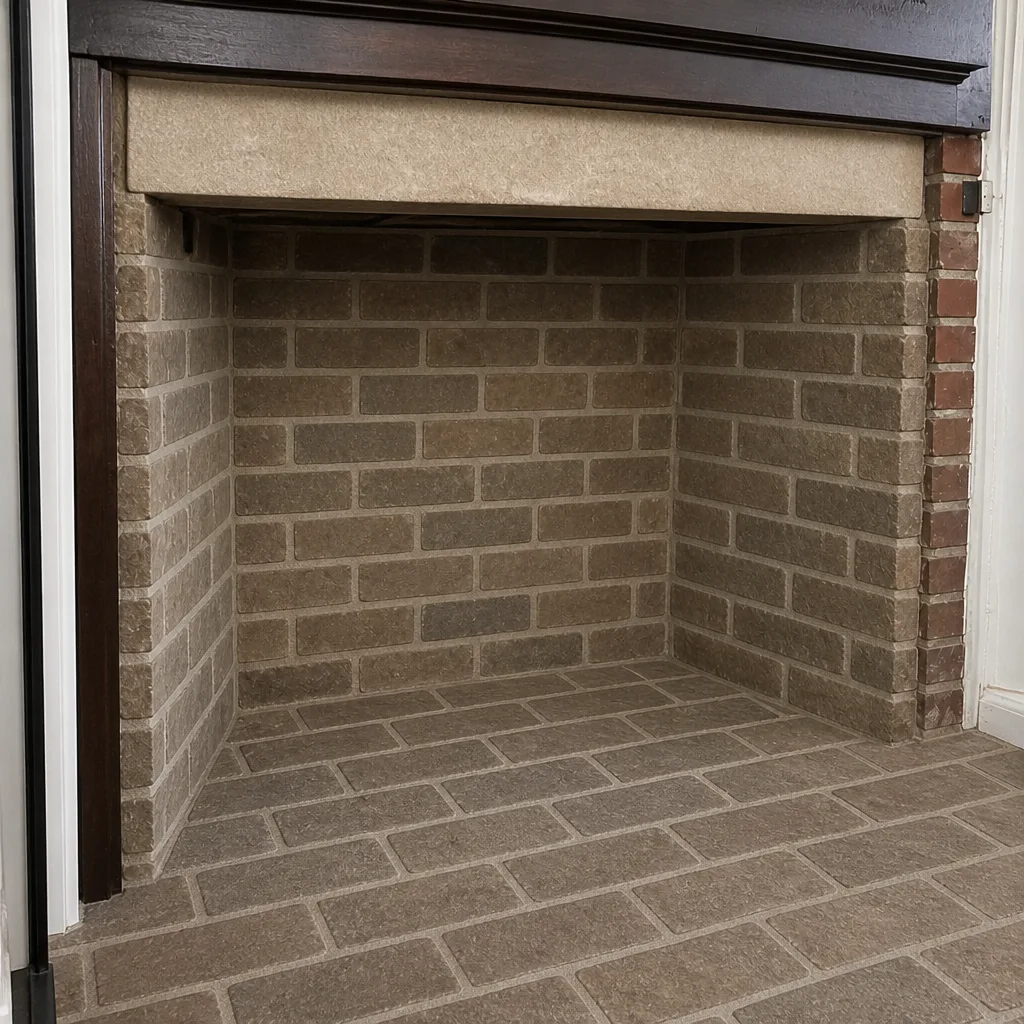
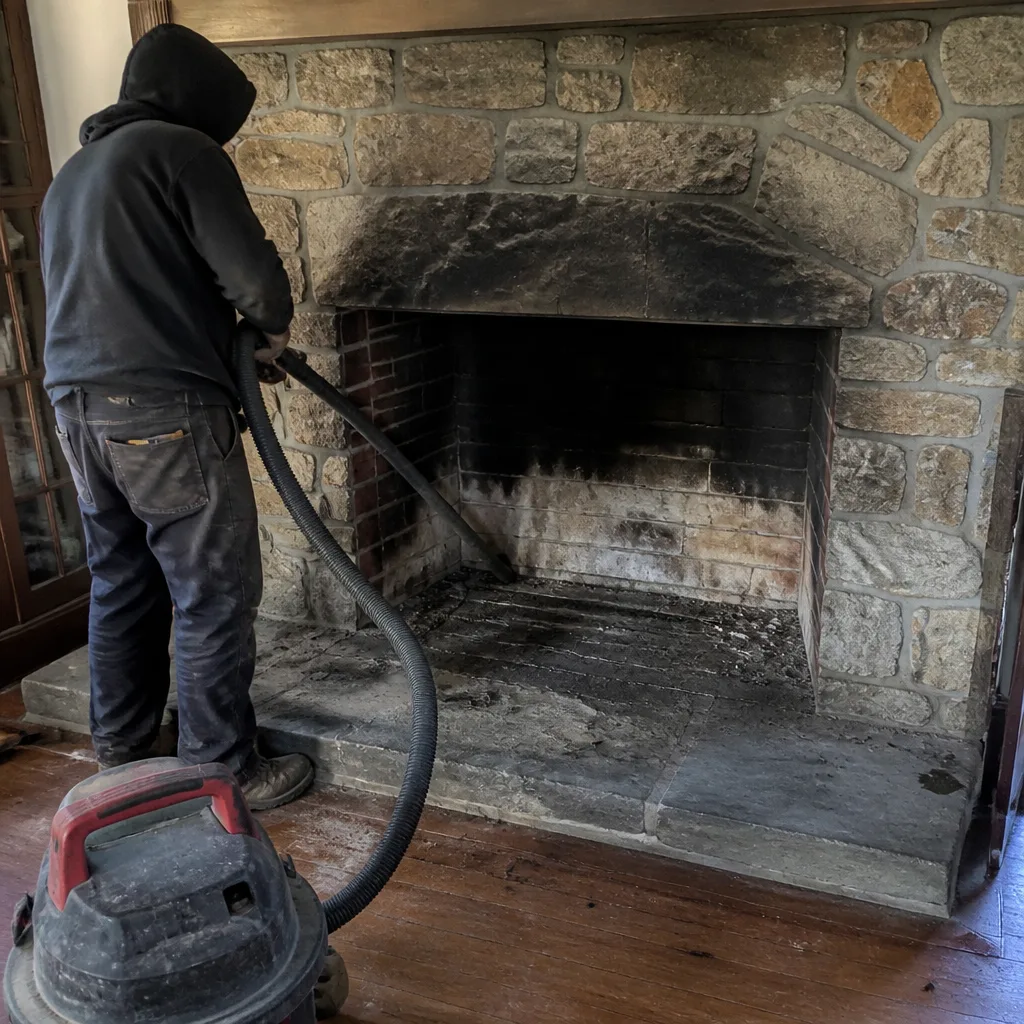
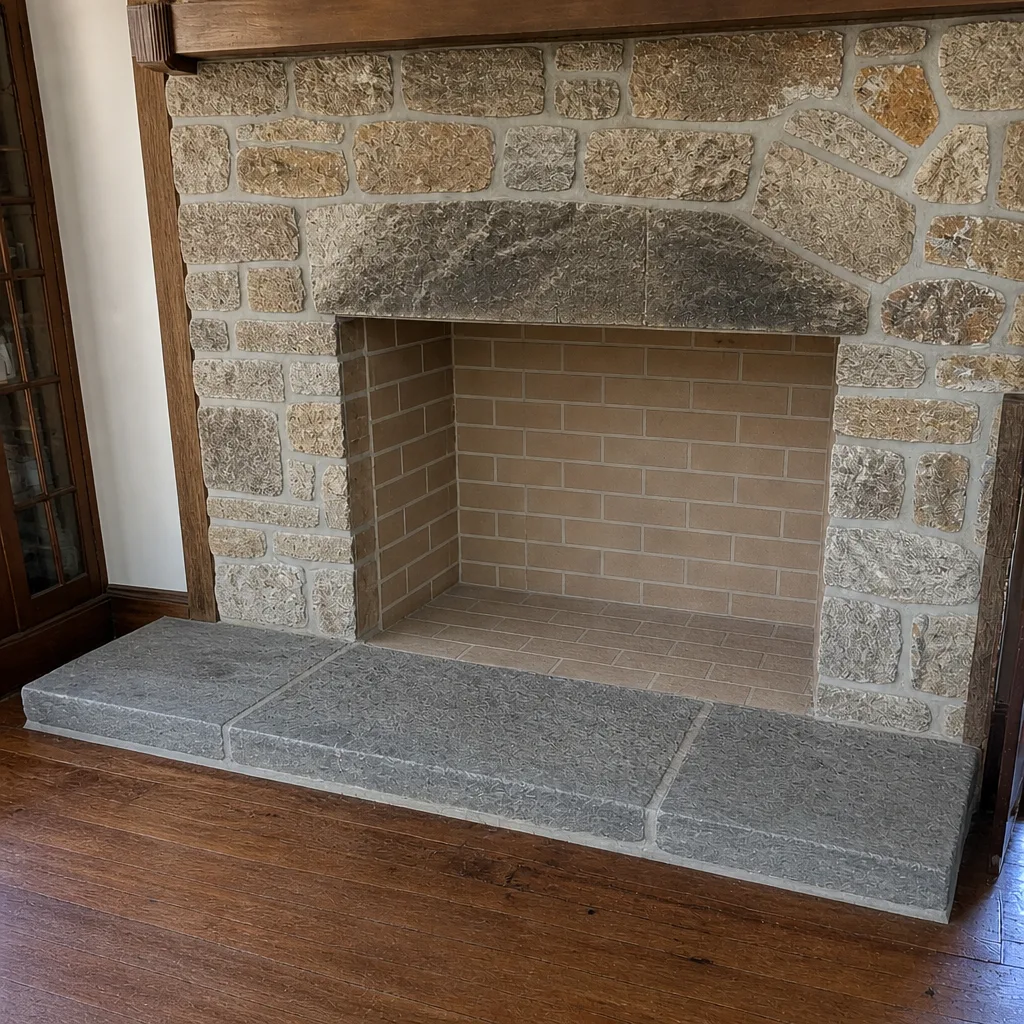
See the difference
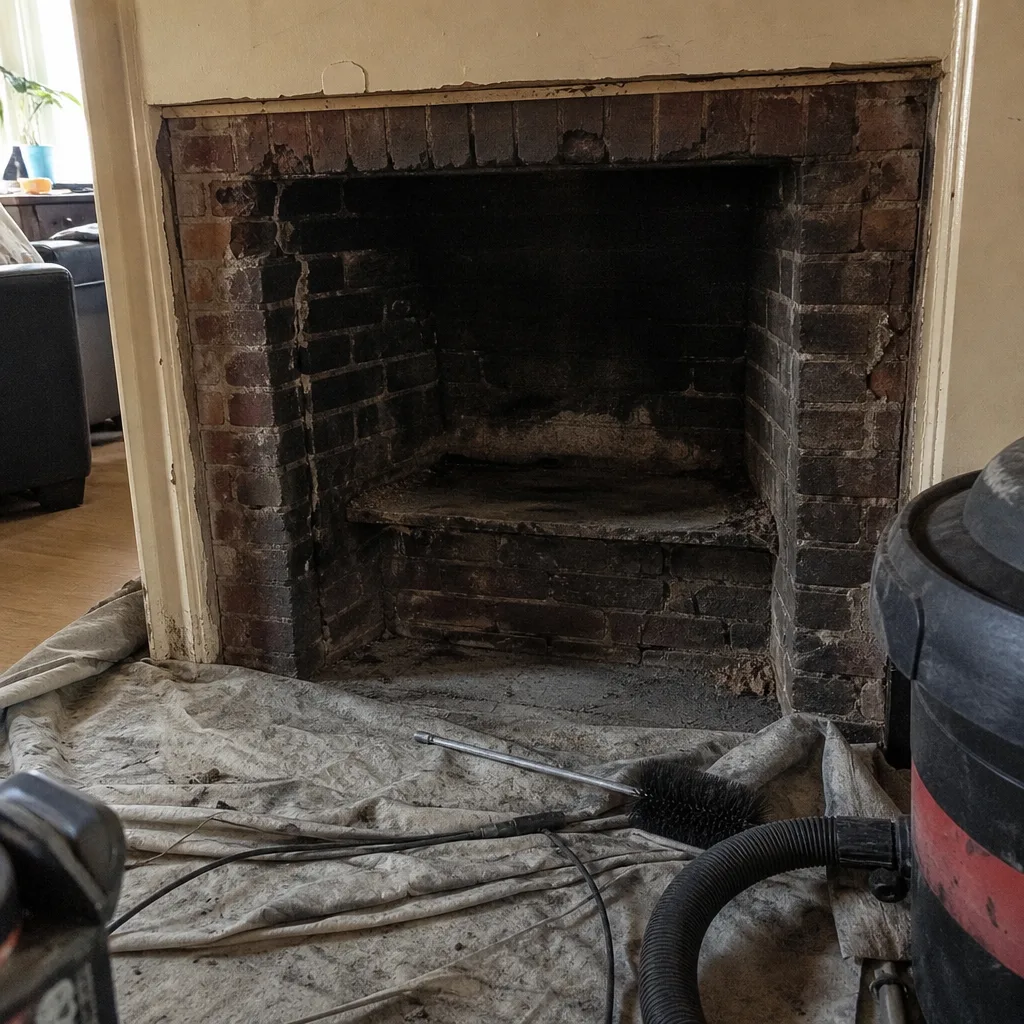 Before
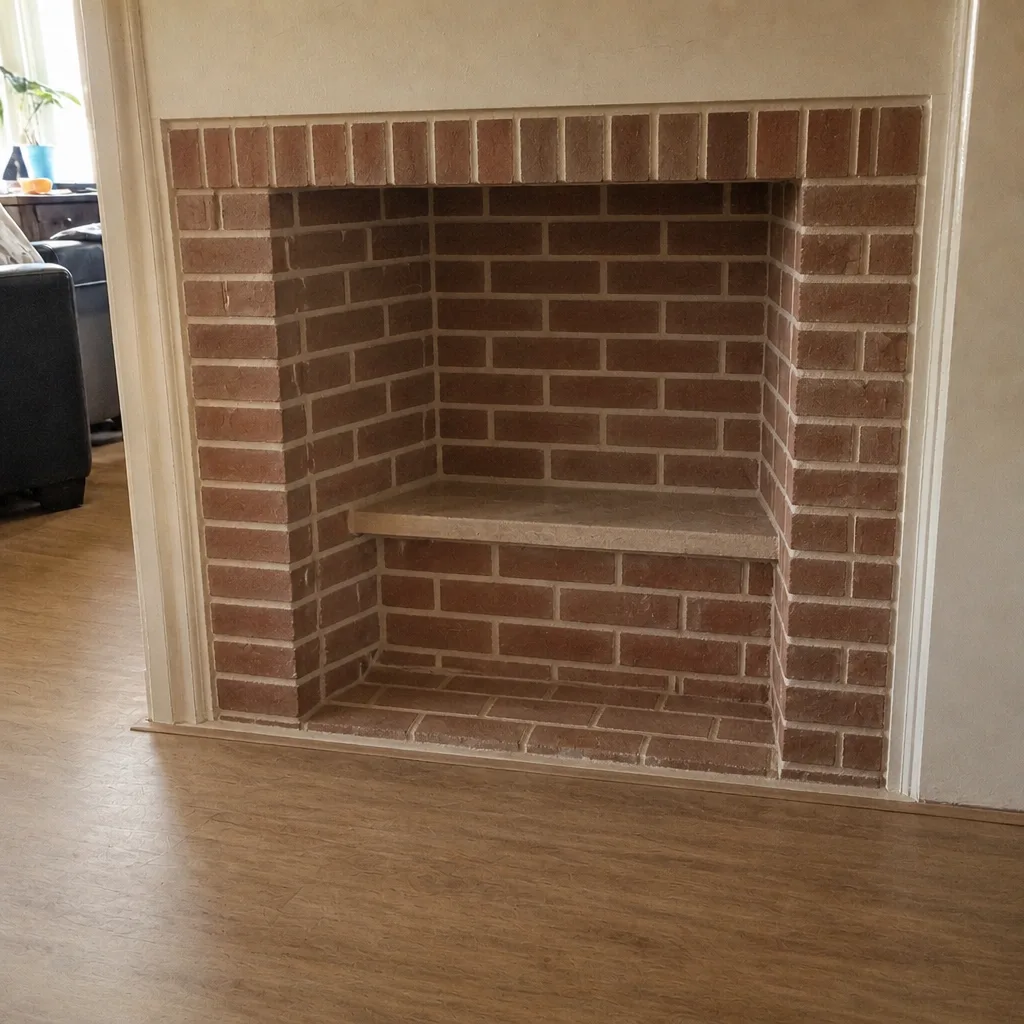 After
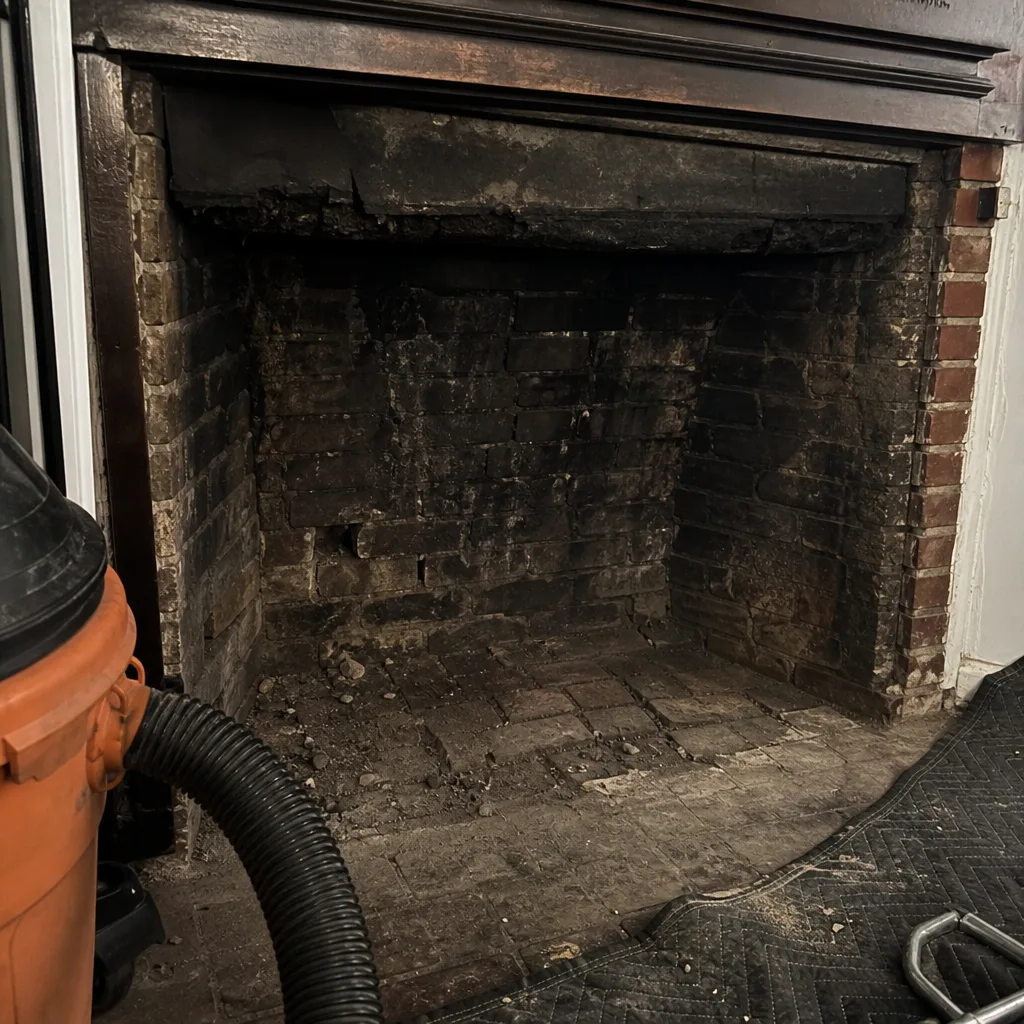 Before
 After
 Before
 After
When to Call a Professional
Call a professional if your chimney has never been inspected since you bought the property, if you burn wood in a pre-war clay tile liner, if you’ve noticed smoke backing into the room, or if you’ve seen or smelled anything unusual around the fireplace. Call before your first fire of the season if you’ve skipped a year or more. And call if a DIY cleaning left you unsure whether the flue above the firebox is actually clear.
Chimney Sweep Bedford-Stuyvesant offers free estimates in Bedford-Stuyvesant. Our technicians have up to 11 years of experience, and an inspection comes with a camera report you keep. Call (855) 724-0919. We answer 24/7. Fast dispatch from 7am to 7pm, Sunday through Friday.
Frequently Asked Questions
No, not for a wood-burning fireplace with an original clay tile liner, which is the most common setup in Bedford-Stuyvesant’s pre-war rowhouses. DIY cleaning doesn’t reach the offset, can’t inspect the liner, and can’t remove glazed creosote. Start with an inspection, then decide on cleaning. Call (855) 724-0919 for a free estimate.
A consumer brush kit cleans the straight lower section of the flue, roughly the first stretch above the firebox. It skips offsets, transitions, the smoke chamber, and anything above the roofline. That’s why it can leave a clean-looking firebox over an untouched flue. Call (855) 724-0919 to arrange a full-flue cleaning and camera inspection.
A professional sweep typically runs in the low-to-mid hundreds of dollars, with the written estimate setting the exact price for your chimney. That covers the full-flue cleaning and the inspection report. The free estimate tells you the number before any work starts. Call (855) 724-0919 for an exact quote.
Most wood-burning chimneys need sweeping once a year, or more often with heavy use. Gas inserts with a factory-built liner usually need less frequent cleaning but still need periodic inspection. The right schedule depends on how much you burn, so start with an inspection to set it. Call (855) 724-0919 for a free estimate.
Your claim isn’t automatically denied, but a self-performed cleaning with no documentation weakens your position. Insurers look for evidence of reasonable maintenance, and a dated professional report is that evidence. A standalone inspection report answers the question before it’s asked. Call (855) 724-0919 to schedule an inspection you can keep on file.
Yes. Nothing is recommended without camera evidence you can see yourself, and we tell you plainly when work can safely wait. The inspection is a standalone service, so you get an independent assessment before any repair is discussed. Call (855) 724-0919 for a free estimate.
The Bottom Line
DIY chimney cleaning is a genuine option for a lightly used gas insert with a factory-built liner, and it’s fine there. For a wood-burning fireplace in a Bedford-Stuyvesant rowhouse with an original clay tile liner, it isn’t, because the tools can’t reach the offset and the work leaves no record of what the liner looks like. Start with an inspection. It’s the cheapest way to learn what your flue needs, it documents the condition of your chimney for your insurer or a buyer, and it tells you whether a professional Chimney Sweep Bedford-Stuyvesant is worth it for your specific chimney. In most Bedford-Stuyvesant rowhouses, it is.
Call (855) 724-0919 for a free estimate. We answer 24/7. Fast dispatch from 7am to 7pm, Sunday through Friday.
Written by the team at Chimney Sweep Bedford-Stuyvesant.